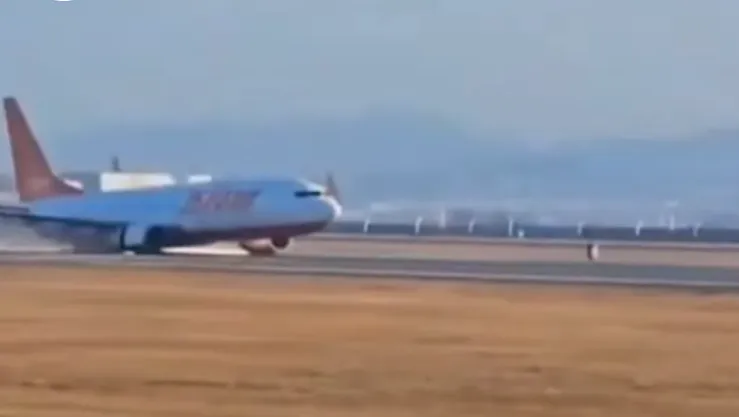
There is a possibility that the pilots of the Jeju Airlines Boeing 737 shut down the wrong engine which resulted in the tragic crash which killed 179 of the 181 aboard.
It is a fact that the Jeju Airlines Boeing 737 did suffer a bird strike and there is clear vision of damage to the right engine from the impact.
However, in the wheels up, flaps up, high speed landing the thrust reverser doors on the right engine are engaged but the left engine ones are not.
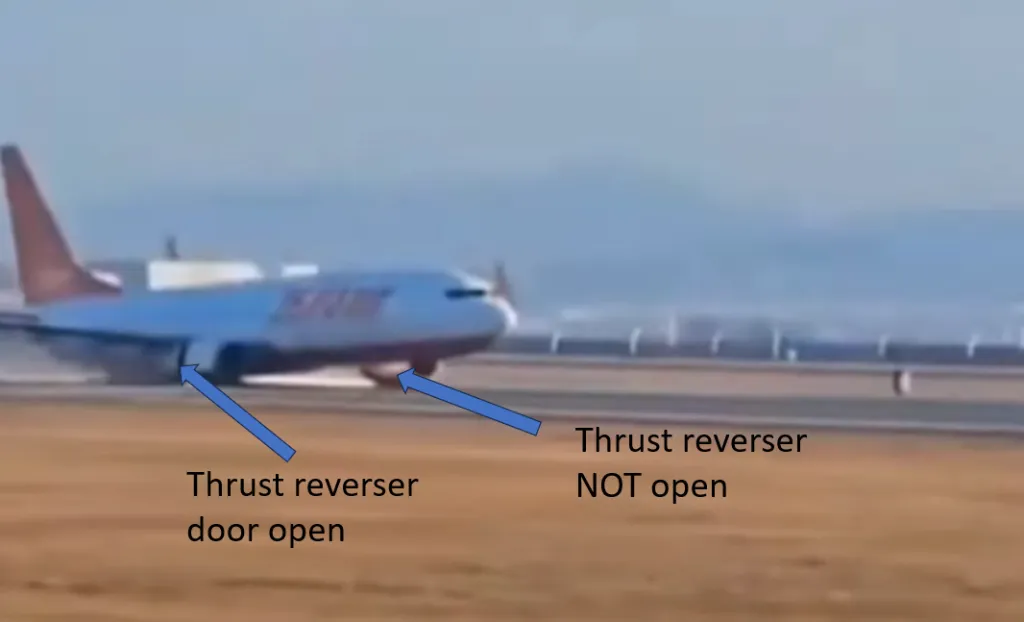
A closer examination of the footage shows that while the right engine thrust reverser doors of the Jeju Airlines 737 are open the left engine thrust reverser doors were not deployed.
See our examination below;
Shutting down the wrong engine in a crisis situation has happened before and the most recent accident was in 2015 when a TransAsia ATR-72-600 operating as flight GE235 from Taipei to Kinmen Island crashed after take-off killing 43 of the 58 on board.
Aside from the tragic crashes in 2024 which made it the worst year for fatalities since 2018, turbulence was a big issue with one passenger dying in a violent encounter involving Singapore Airlines over Myanmar.
Severe turbulence has increased by 55% in the past 40 years because of the impact of climate change according to the University of Reading.
The new research shows that clear-air turbulence, which is invisible and hazardous to aircraft, has increased in various regions around the world.
The report found that at a typical point over the North Atlantic – one of the world’s busiest flight routes – the annual duration of severe turbulence increased by 55% from 1979 to 2020.
Moderate turbulence increased by 37% and light turbulence increased by 17%. For more information: