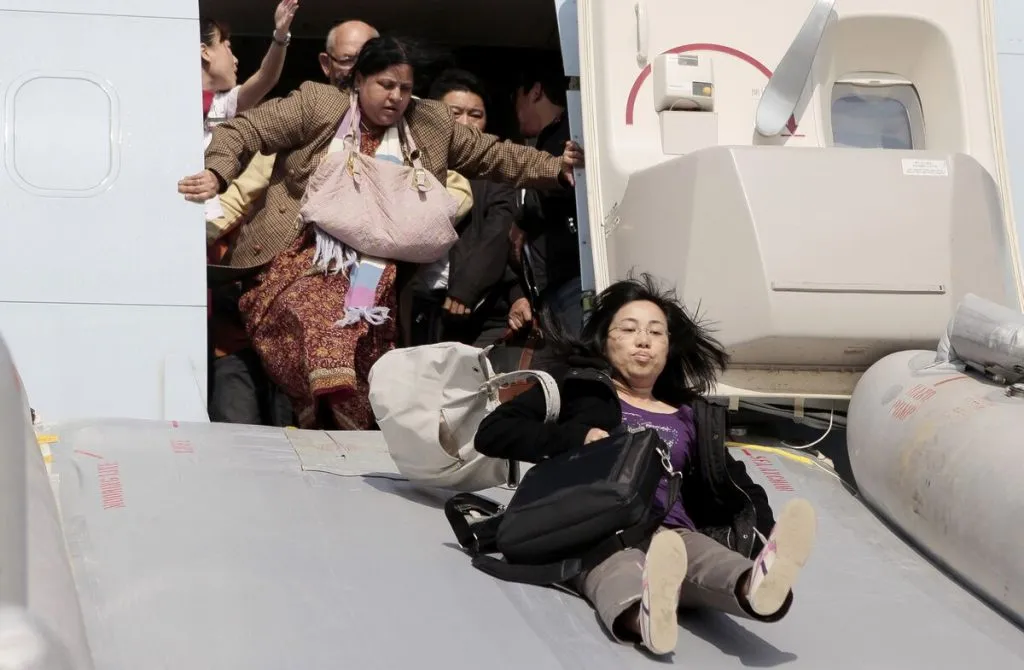
The Federal Aviation Administration (FAA) has issued an urgent warning to airlines and the flying public: stop grabbing your carry-on bags during emergency evacuations — lives depend on it.
In a newly released Safety Alert for Operators (SAFO 25003), the FAA is sounding the alarm about a dangerous and persistent problem: passengers attempting to retrieve luggage in the middle of life-or-death evacuations. The agency says this behavior has repeatedly led to delays, injuries, and even fatalities when every second counts.
“Any delay caused by retrieval of baggage can significantly affect survival rates in rapidly deteriorating conditions,” the FAA warns in the bulletin
A Preventable Hazard
Investigations of past incidents show a disturbing pattern: in the chaos of smoke-filled cabins and fire threats, passengers routinely slow down evacuations by reaching for overhead bins. This can block aisles, damage slides, and cause dangerous pile-ups near exits.
The FAA notes that even brief delays can push total evacuation times past survivability thresholds. Fires and smoke in an aircraft cabin can become lethal within 90 seconds — leaving little room for error.
The FAA’s Call to Action
The agency is calling on airlines to overhaul safety procedures, training, and passenger messaging. Key recommendations include:
Stronger safety briefings – with explicit, no-exceptions language instructing passengers to leave all belongings behind.
Public awareness campaigns – using videos, signage, and pictograms to normalize the message that “everyone leaves bags behind.”
Better crew training – focusing on passenger compliance and exit row briefing effectiveness
The FAA is also urging airlines to use their Safety Management Systems (SMS) to identify and mitigate risks tied to non-compliance before disaster strikes.
A Culture Change in the Cabin
Industry experts say the bulletin highlights a cultural challenge as much as a safety one. Frequent fliers and social media users often treat carry-ons as indispensable — sometimes even filming evacuations with phones in hand.
“Passengers must understand that their suitcase could cost someone else their life,” said an aviation safety consultant. “The FAA’s push is about resetting expectations so that leaving everything behind becomes instinct.”
What It Means for Travelers
Airlines are expected to begin rolling out revised safety announcements and educational materials in the coming months. Travelers should prepare to hear blunter, more forceful messaging on board — and potentially see visual campaigns in airports reminding them to put safety over possessions.
The FAA’s message is clear: when the worst happens at 35,000 feet, your belongings are replaceable. Your life — and the lives of others — are not.
Would you like me to rewrite this for a television news segment script — with punchy anchor lines and potential soundbites for experts? That could make it ready for on-air delivery.