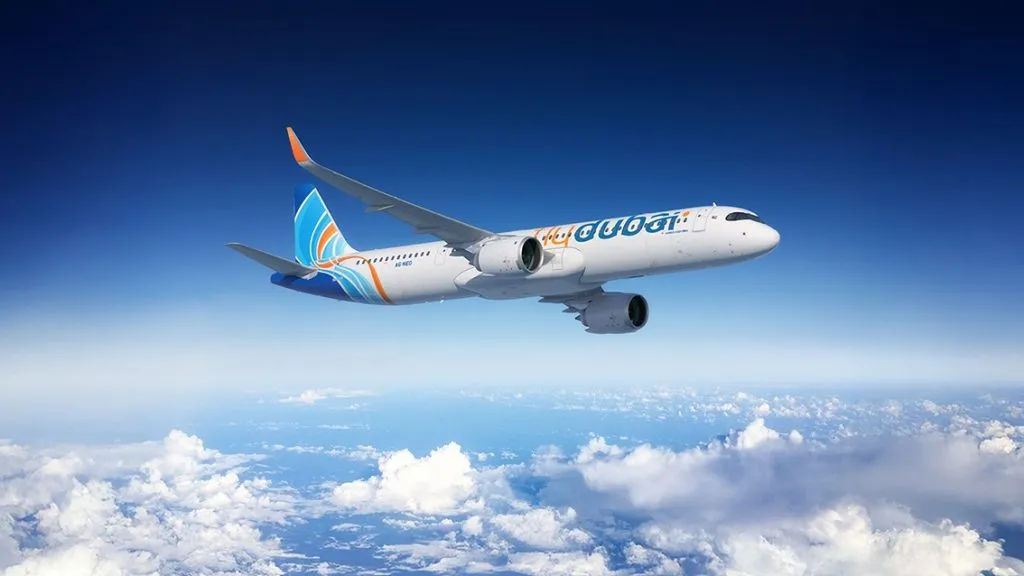
flydubai has placed its largest-ever order for Airbus aircraft, signing a Memorandum of Understanding for 150 A321neo jets and marking the airline’s first purchase agreement with the European manufacturer. The deal, unveiled on the second day of the Dubai Airshow 2025, signals strong confidence in Dubai’s long-term development plans and represents a major diversification of the carrier’s narrow-body fleet.
The MoU was signed by His Highness Sheikh Ahmed bin Saeed Al Maktoum, Chairman of flydubai, and Christian Scherer, CEO Commercial Aircraft at Airbus. Ghaith Al Ghaith, flydubai’s Chief Executive Officer, attended the ceremony.
“This landmark agreement represents another important milestone in flydubai’s journey,” said Sheikh Ahmed. “It supports the vision of His Highness Sheikh Mohammed bin Rashid Al Maktoum and aligns with the Dubai Economic Agenda D33. More than adding aircraft, this strategic addition strengthens our long-term expansion plans and enables flydubai to play a key role in Dubai World Central’s growth into what we aim to become the world’s largest airport.”
He added that the A321neo fleet will underpin the next phase of the airline’s network development, giving flydubai additional range, capacity and flexibility to meet rising travel demand across its markets.
Christian Scherer welcomed flydubai as an Airbus customer for the first time. “The decision to invest in the A321neo is another endorsement of the added value Airbus brings in terms of range, efficiency and passenger comfort,” he said. “We are proud to support flydubai as it unlocks new growth opportunities with our aircraft.”
The A321neo, part of the A320neo family, incorporates new-generation engines, Sharklets and cabin efficiency features that deliver more than 20% fuel savings and CO₂ reductions compared to previous single-aisle types. By the end of October 2025, over 7,200 A321neos had been ordered by nearly 100 customers worldwide. Airbus notes that the A320 Family is already certified to operate with up to 50% Sustainable Aviation Fuel, with a target of 100% SAF capability by 2030.