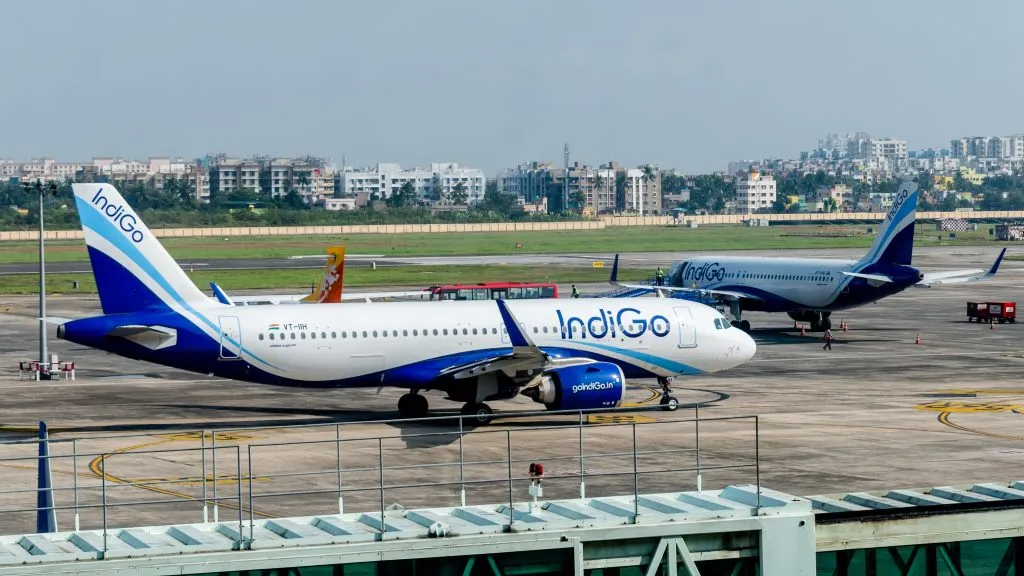
For the fourth straight day, air travel across India lurched from delay to disruption as IndiGo — the country’s largest carrier by far — canceled more than 1,000 flights and temporarily halted all departures from New Delhi. What began as a regulatory shift meant to make flying safer has spiraled into one of the most chaotic weeks for Indian aviation in recent memory.
SEE Indigo’s Safety, Product and Environmental Rankings
India’s aviation authorities had spent months preparing new safety rules aimed at combating fatigue in one of the world’s fastest-growing aviation markets. The regulations tighten limits on how long pilots can fly in a day and impose stricter curbs on night operations — a long-requested overhaul in a country where demand often outpaces crew availability.
But IndiGo, which controls more than half of India’s domestic market, misjudged the scale of the transition. With the November 1 implementation deadline looming, the airline failed to sufficiently rework its rosters, leaving it suddenly short of rested, rule-compliant pilots as the December holiday surge approached.
What followed was a cascading schedule meltdown: mass cancellations, overwhelmed terminals and thousands of passengers stuck in terminals from Delhi to Kochi.
On Friday, IndiGo CEO Pieter Elbers broke his silence, acknowledging the airline’s missteps.
“These disruptions have shaken customers’ belief in IndiGo’s reliability,”
— Pieter Elbers, CEO
He warned that although flights would gradually resume, IndiGo would not return to “full, normal operations” until between December 10 and December 15.
Just hours earlier, the airline had privately told Indian officials it might need until February 10 to fully recover — a timeline that underscored the severity of the crisis.
With queues snaking through terminals and social media filled with scenes of travelers sleeping on floors, the Indian government intervened. Regulators granted IndiGo a temporary exemption from parts of the new duty-time rules, allowing it to keep more flights running while it rebalances its network.
The head of India’s aviation regulator also issued a public appeal to pilots, urging cooperation and reiterating that the fatigue-management rules would still be implemented “in letter and spirit” once the crisis passes.
Perhaps most telling is that no other major Indian carriers — not Air India, not Vistara, not Akasa — suffered comparable disruption. They, unlike IndiGo, completed their staffing and scheduling adjustments ahead of time.
That contrast has fueled criticism that IndiGo, long hailed for its operational discipline, has grown too big to stumble without shaking the entire system.
Across the country, travellers described missed weddings, derailed business trips, and nights spent pressed against terminal walls as they waited for rebooking options that often didn’t exist.
With peak December travel already underway, many passengers found that alternate flights on other airlines were sold out — or priced far beyond reach.
“I’ve flown IndiGo for years because they were always on time,” said one stranded traveller in Bengaluru. “I never imagined they’d collapse like this.”
India has weathered airline disruptions before — from Jet Airways’ collapse to Air India’s pandemic-era schedule chaos — but this episode is distinct for three reasons:
Scale: IndiGo alone carries more passengers than all other Indian airlines combined. When it stumbles, the system shakes.
Timing: The meltdown hit just as December holiday traffic peaked.
Cause: The trigger wasn’t weather, strikes or financial stress but a management planning failure during a regulatory upgrade.
IndiGo says passengers should begin to see “progressive improvement” from Saturday. Still, experts warn that crew duty cycles create lag effects — meaning it may take days for pilots, schedules and aircraft rotations to fully realign.
Travel agents are already warning customers to expect rolling delays and to avoid tight connections.
The crisis has reopened an uncomfortable debate: can India’s aviation infrastructure — from crew pools to regulatory capacity — keep pace with a market expanding at double-digit rates?
For passengers, the answer this week is a resounding not yet.