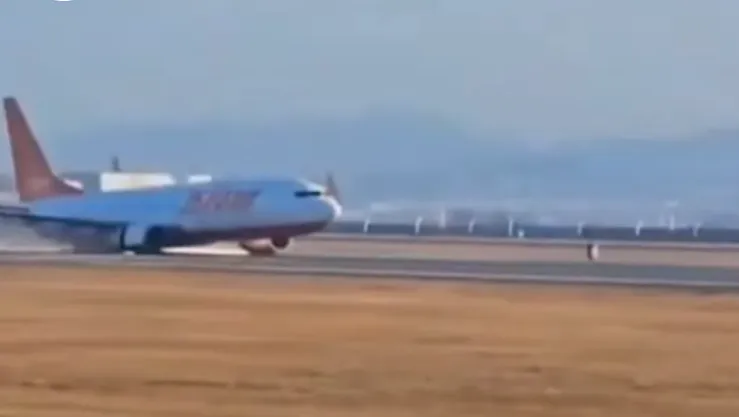
There are no clues yet as to what happened in the cockpit of Jeju Airlines Flight 2216 which crashed on December 29, 2024 killing 179 of the 181 aboard.
The Korean Ministry of Land Infrastructure and Transport issues its preliminary report today and because the last four minutes of the flight were not recorded on the two black boxes the investigation will take much longer.
The preliminary report submitted to ICAO does not indicate what may have led to the two black box recorders stopping simultaneously just prior to the pilots declaring a mayday.
At this moment the 737-800 was at an altitude of 498ft flying at 161 knots or 185mph the report said.
The authorities had earlier confirmed that feathers and blood had been found in both engines.
Below is what we know of the time line.
So, what do we know for facts and what is informed speculation about the Jeju Airlines crash?
8.54am: The Jeju airlines 737 was on approach to runway 01 at Maun International airport at about 1000ft with undercarriage down and faps set.
8.57: ATC warns of birds
8.59: Pilot reports a bird strike and declared an emergency and go-around. It is thought that the birds took out the left-hand engine.
At this point the aircraft stops transmitting ADSB data to air traffic control indicating some kind of electrical failure which also accounts for the failure of the black boxes.
The Jeju Airlines crew retracted the undercarriage and flaps
Video vision captures what appears to be a second bird strike on the right-hand engine possibly disabling it.
9.01: ATC grants permission to land on runway 19 to the south. Aircraft approaches with gear and flaps up possibly to maintain speed and floats down the runway due to ground effect
9.02: The right-hand engine thrust reverser is deployed but if the engine was working it would have sent the aircraft off the runway which didn’t happen.
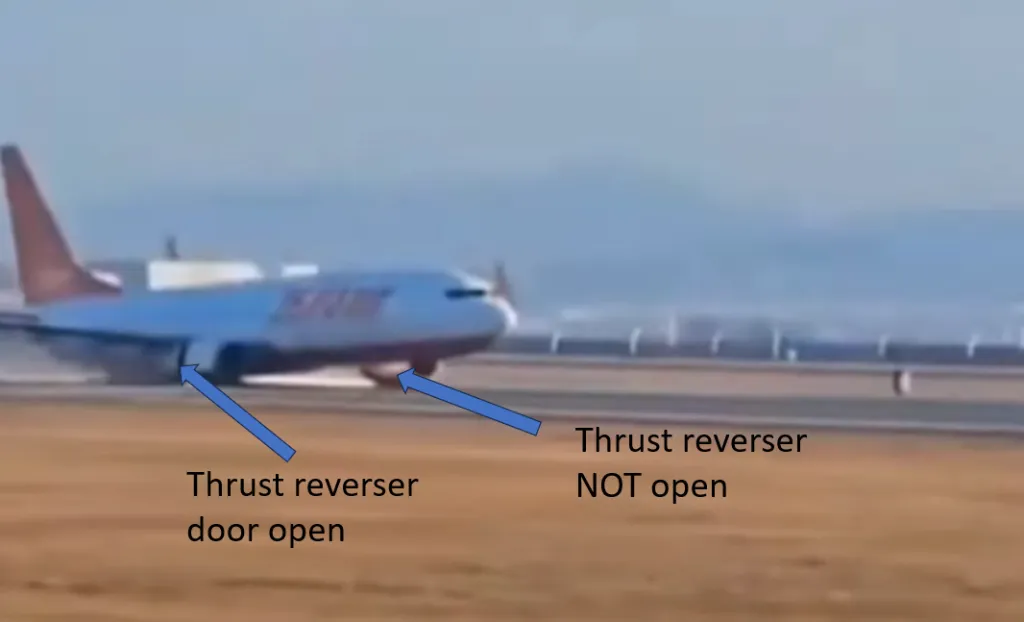
9.03: Aircraft impacts localizer.
One must assume there was no power from either engine as the aircraft took a direct course down the runway.
As mentioned the critical last four minutes of the black boxes was not recorded. In case of an electrical failure there is no battery backup to the black boxes for this aircraft which was manufactured in 2009. In 2010 the FAA mandated battery backup.
The collision with the localizer beam killed all but two of the passengers and crew, The two crew who survived were seated in the rear of the aircraft.
The Maun Airport is located near a major bird habitat that has had the most cases of bird strike of any of the South Korean airports, 10 cases since 2019.