Even as autumn leaves are still clinging to the trees, American Airlines is already shifting gears for winter. The airline’s annual deicing season officially began October 1 and will run through the spring, ensuring aircraft can operate safely and efficiently across the network when frost, ice, and snow appear.
While the process can add a few extra minutes to pre-departure routines, it’s an essential step to keep flights — and passengers — moving smoothly through the colder months.
SEE America’s Safety Ranking here:
American’s winter readiness starts long before the first snowflake falls. Planning typically begins in summer, with teams updating procedures, training crews, inspecting and maintaining equipment, and procuring glycol-based deicing fluids. The goal is to make sure every airport that performs deicing can spring into action the moment winter weather hits, minimizing disruptions and keeping schedules on track.
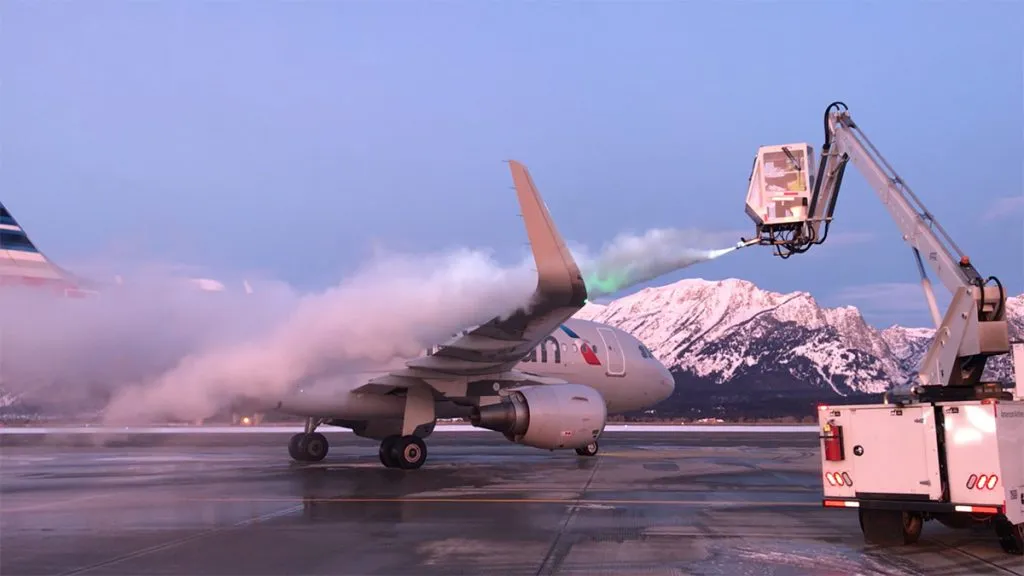
Deicing is more than a seasonal ritual — it’s a vital safety operation governed by the Federal Aviation Administration and international aviation authorities. Working in coordination with flight crews, airport teams, vendor partners, and American’s Integrated Operations Center, deicing crews use specialized trucks fitted with heated tanks and high-reach booms to clear aircraft surfaces. The process begins with a blast of orange Type I fluid, heated to about 140°F, to melt frost and snow. In harsher conditions, a green Type IV anti-icing fluid follows, preventing reaccumulation before takeoff.
Sometimes, though, the weather wins. In extreme cases such as freezing rain or prolonged subzero temperatures, American — like all airlines — may have to pause deicing operations. This can occur when holdover time, the period between deicing and takeoff, becomes too short for safe operations. Such pauses are rare but highlight the precision and caution required in winter aviation.
Although cities like Chicago O’Hare, LaGuardia, and Boston Logan are the usual suspects when it comes to deicing, the operation isn’t confined to the north. American also conducts deicing at airports including Dallas Fort Worth, Charlotte, and occasionally Phoenix and Nashville, where sudden winter conditions can still pose risks. At O’Hare alone, American deices between 6,000 and 10,000 aircraft each season, using roughly half a million gallons of glycol — proof that winter readiness is no small task.
As the days get shorter and the air a little crisper, American’s deicing crews stand ready once again — keeping the airline’s wings clean, its schedules steady, and its passengers safely soaring through winter’s chill.