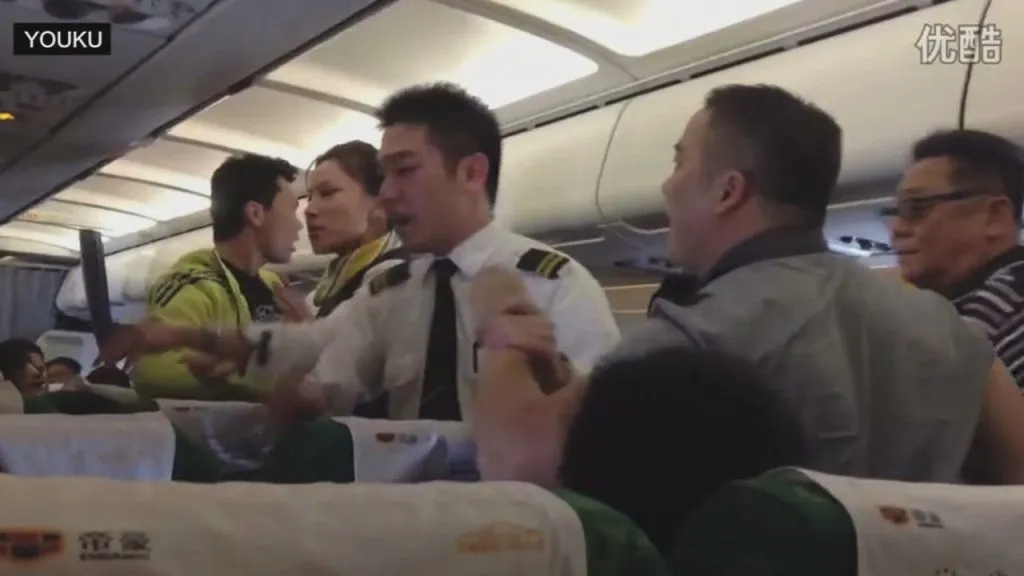
The rise and rise of air rage is emerging from a nuisance to a global problem for the airline industry.
At altitude, commercial aviation represents one of humanity’s most controlled environments. Every system—from avionics to air traffic separation—is engineered for redundancy and predictability. Yet inside the cabin, a very different reality is emerging.
Passenger behaviour—once a minor operational concern—is now a measurable, persistent risk. The rise of air rage is not simply a social trend. It is a data-backed shift with implications for safety, economics, and the future design of airline operations.
For decades, unruly passenger incidents existed at low, manageable levels. Between 2017 and 2019, the U.S. Federal Aviation Administration (FAA) recorded approximately 800–900 cases annually. In global aviation terms, that equated to a negligible disruption rate—rare enough to be absorbed within normal operational margins.
Then came 2021.
In that year alone, the FAA logged 5,973 unruly passenger incidents, representing a fivefold increase over pre-pandemic norms. It was the highest number ever recorded in a single year. More striking still, analysts noted that 2021 alone produced more incidents than the previous three decades combined.
This was not a gradual rise. It was a dramatic change.
The drivers were immediate—mask mandates, heightened anxiety, and reduced tolerance for authority—but the aftermath has proven more enduring than expected.
By 2022 in the US, incidents dropped but remained elevated at over 2,400 cases. In 2023 and 2024, the numbers stabilised above 2,000 annually, still roughly double historical baselines. Preliminary 2025 figures suggest a further decline to around 1,200–1,500 cases, yet crucially, not a return to pre-2020 levels.
While U.S. data is the most comprehensive, air rage is not confined to one regulatory environment. It is systemic across the global network.
The International Air Transport Association (IATA) provides a critical metric: incident rate per flight. In 2022, there was one unruly passenger incident for every 568 flights, compared to one per 835 flights in 2021.
In 2023 it was one event every 480 flights. In European airspace alone, regulators estimate a disruptive passenger incident every three hours somewhere in the system.
So putting a number on that, there were 37 million commercial flights in 2023 so there were 77,083 cases of air rage.
In the Uk in 2019, according to official Civil Aviation Authority (CAA) statistics, there were 390 occasions of air rage. By 2023, the number had risen to 1,245 incidents, and in 2024 it remained well over 1,000.
Traditionally, airline risk models have focused on mechanical failure, weather, and human error in the cockpit. Air rage introduces a fundamentally different category: passenger-originated operational disruption.
This risk is uniquely difficult to model because it is:
Non-linear: minor triggers can escalate rapidly
Externally sourced: behaviour originates outside airline control
Psychologically driven: not governed by technical constraints
The International Civil Aviation Organization (ICAO) defines an unruly passenger as one who fails to respect crew authority or disrupts good order onboard. Operationally, however, incidents are classified along a severity spectrum:
Level 1: Verbal abuse, refusal to comply
Level 2: Physical aggression toward crew or passengers
Level 3: Serious threats or use of weapons
Level 4: Attempted cockpit intrusion
To understand air rage, one must understand the cabin as an engineered environment.
An aircraft cabin combines several destabilising conditions: physical confinement with no exit and no escape; high density with more passengers per square metre than most public spaces; environmental stressors such as low humidity, noise and fatigue as well as authority enforcement having to follow crew instructions which are legally binding.
This creates what human factors researchers describe as a “closed escalation loop.”
Conflict cannot dissipate spatially. It must be resolved—or it intensifies and modern airline economics compound the issue.
Load factors routinely exceed 85–90%, leaving minimal buffer for passenger separation.
Seat pitch reductions and ancillary revenue models have introduced additional friction points—seat selection disputes, baggage conflicts, and perceived inequities in service.
On top of that 30% of passengers have a fear of flying increasing tension levels.
The result is a cabin environment primed for escalation.
Every air rage incident carries financial consequences. At the extreme end, diversions triggered by unruly passengers can cost $50,000 to over $200,000 per flight, depending on aircraft type, fuel burn, crew duty limits, and downstream disruptions.
Even non-diversion incidents generate costs: crew time and reporting requirements; ground handling delays; law enforcement coordination and passenger re-accommodation.
Across multiple datasets, alcohol remains one of the most consistent contributing factors.
Studies and regulatory reports indicate that a significant proportion of incidents involve pre-flight intoxication or excessive in-flight consumption. Airports—where alcohol is often consumed without the same regulatory oversight as onboard service—have become a critical control point.
Several airlines have experimented with: limiting alcohol service; banning duty-free alcohol consumption onboard and coordinating with airport bars to restrict sales.
However, the global nature of aviation complicates standardisation. Policies vary widely between jurisdictions, creating inconsistent enforcement.
Alcohol does not cause all air rage. But it amplifies it.
The COVID 19 pandemic acted as an accelerant, but its effects have outlasted its triggers.
During 2021, mask-related disputes accounted for a majority of incidents in the United States. As mandates disappeared, one might have expected incident rates to collapse. Instead, they plateaued at a higher baseline.
This suggests a broader behavioural shift.
Some analysts point to a “normalisation of confrontation” in public spaces. Others cite increased anxiety, reduced tolerance, and a breakdown in social cohesion following prolonged global disruption.
The aircraft cabin, in this sense, is not the origin of the problem. It is where the problem becomes unavoidable.
One of the most persistent challenges in managing air rage is jurisdiction.
An aircraft in flight may be registered in one country, operated by a carrier from another, and carrying passengers from dozens more. When an incident occurs, determining legal authority is not always straightforward.
The Montreal Protocol 2014 (MP14) was introduced to address this issue, allowing the state of landing to prosecute offenders. However, adoption has been uneven, and enforcement remains inconsistent.
IATA has repeatedly warned that many offenders face no legal consequences, particularly on international routes. This weakens deterrence and undermines crew authority.
In effect, the cabin can become a legal grey zone—precisely where clarity is most needed.
Airlines have been forced to adapt to this cocktail of issues.
Crew training now emphasises de-escalation techniques, conflict psychology, and coordinated restraint procedures. Many carriers maintain internal no-fly lists, banning repeat offenders.
Regulators have shifted posture as well. The FAA’s zero-tolerance policy, introduced in 2021, eliminated warning letters in favour of immediate enforcement action.
Other measures include: increased reporting requirements; data sharing between airlines and authorities and public awareness campaigns
Yet despite these interventions, incident rates remain elevated. Behavioural risk is proving more resistant to mitigation than technical risk.
A single severe incident can: force an emergency diversion; injure crew or passengers; trigger security responses and disrupt entire network schedules
More critically, incidents involving cockpit interference—even if unsuccessful—represent a direct challenge to the foundational principle of aviation security established after 2001.
Air rage is no longer an anomaly. It is part of the operating environment.