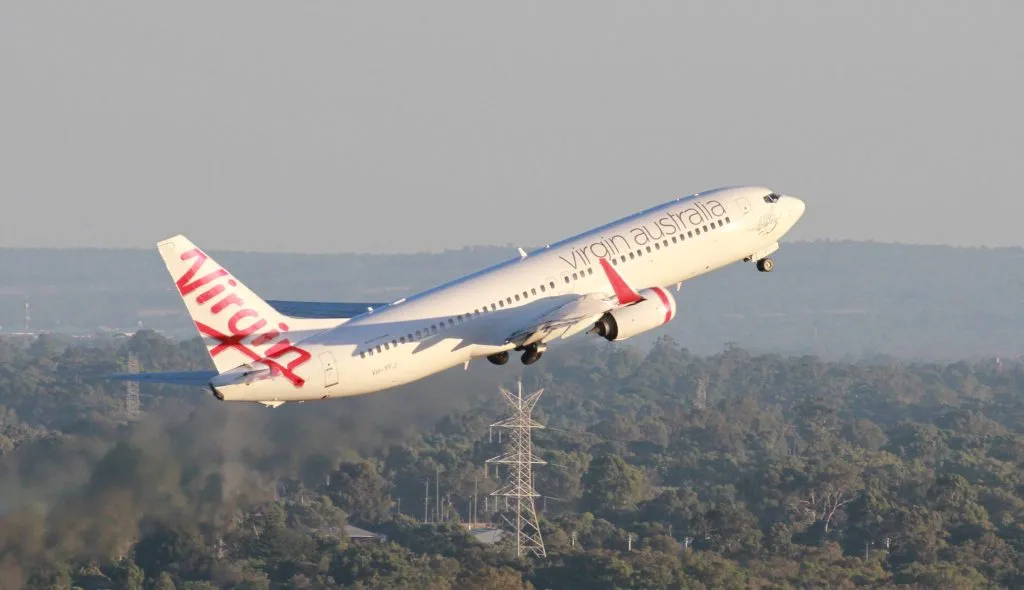
Virgin Australia Holdings Limited has maintained its full-year earnings guidance, despite a sharp spike in global fuel prices driven by escalating tensions in the Middle East.
See Virgin Australia Comfort, Reliability and Environmental Rankings
In a market update released Wednesday, the airline said strong passenger demand and effective fuel hedging had helped offset rising costs, allowing it to keep its financial outlook for FY26 unchanged.
The carrier expects underlying earnings (EBIT) and margins in the second half of FY26 to exceed those recorded in the same period last year, signalling continued recovery and resilience in its core domestic business.
Fuel remains one of the airline’s largest expenses, accounting for $554.7 million — or 21 per cent of total operating costs — in the first half of the financial year. Virgin Australia consumed the equivalent of 3.4 million barrels of oil during that period.
However, jet fuel prices have more than doubled since late February, creating a significant cost headwind for the June quarter. The airline said its hedging strategy — which locks in fuel prices in advance — had shielded it from the worst of the volatility.
For the remainder of FY26, Virgin Australia has hedged 92 per cent of its exposure to Brent crude oil and 71 per cent of refining margins. Even so, it expects fuel costs in the second half to rise by between $30 million and $40 million compared to earlier forecasts.
To help offset these pressures, the airline has already adjusted airfares and capacity. Revenue per available seat kilometre (RASK) is now expected to grow around 5 per cent in the second half — up from previous guidance of 3 to 4 per cent — and reach 6 per cent growth in the June quarter.
Domestic capacity is forecast to increase by 1 per cent over the second half, before declining slightly in the final quarter, reflecting a more cautious approach as costs rise.
Despite the challenging fuel environment, Virgin Australia said its balance sheet remains strong, with net debt sitting at just 0.8 times underlying EBITDA — below its target range — and liquidity of $1.5 billion.
The airline also addressed disruptions to its long-haul operations, confirming that services to Doha — operated under a wet lease agreement with Qatar Airways — have been suspended until mid-June. It noted the arrangement limits financial risk and is not material to earnings.
Looking ahead, Virgin Australia said it remains well hedged for the first half of FY27, covering 93 per cent of Brent crude exposure, though refining margin protection is lower at 15 per cent. The airline said it is reviewing capacity plans for FY27 amid ongoing market uncertainty.
While fuel supply remains secure in the near term, the company warned that continued volatility could prompt further operational adjustments.